Letrozole, Fulvestrant & The Art of Not Losing Your Mind (Too Much)
Do I stay on Letrozole or abandon ship?
Honestly, I think that’s the million-dollar question on every hormone-positive cancer forum—and it’s also the question that echoes in my head, usually around 3 a.m., when insomnia and joint pain hold their nightly team meeting.
I wasn’t even in menopause when I was thrust onto Letrozole. But thanks to chemo, Lupron, and the eventual ovary and fallopian tube eviction notice, menopause wasn’t just a suggestion—it was a full-blown hostile takeover. Given my triple-positive diagnosis, Tamoxifen just wasn’t going to cut it. The AIs were calling.
So I did what any Type-A cancer overachiever does: I researched. I pored over studies, joined message boards, cross-referenced survival stats, and practically earned a mini-degree in estrogen suppression. I landed on Letrozole—not because it was dramatically better than the others, but because it slightly nudged the needle in the right direction.
I’ve been on Letrozole for almost a year now. For a while, I blamed the way I felt on chemo, Herceptin, Perjeta, Zometa, and just… life. But as each med dropped off the calendar, one remained: Letrozole. And let’s just say, the pain party didn’t leave with the others. My hands? Don’t get me started. Some days I can’t write, type, or open a jar of pickles without considering a YouTube tutorial. The worst part? I used to bounce out of bed. Now I negotiate with gravity.
Don’t get me wrong—this isn’t me just sitting around in pain. I’m moving.
I’m lifting. I’m sweating. I’m boxing, playing tennis, walking, and weight training five days a week. Because if I’m going to fight cancer, I’m bringing all the endorphins with me. My joints might scream, but my spirit is throwing punches. When the joints really scream, I roll myself into acupuncture sessions like a pin cushion. Pro tip: if you’re navigating these side effects, try everything—bodywork, stretching, Epsom salt baths, even prayer and profanity. Whatever keeps your body moving and your sanity intact.
Then came a twist. I hired a company to look at my DNA and RNA to personalize my cancer risk. Their verdict? Letrozole was indeed the best AI for me—but they threw in a curveball: Fulvestrant. Apparently, it’s even more effective for someone with my genomic makeup. The only problem? It’s typically reserved for metastatic cases. Which I don’t have. Which is good—but also incredibly frustrating.
So here I am, CEO of My Cancer Journey, making daily decisions like a Fortune 500 exec. I drink celery juice, tart cherries, wild blueberry, lemon water, and pomegranate like I’m auditioning for an antioxidant documentary. My morning starts with coffee (I’m not a barbarian), and then I move into my juicing circuit like I’m training for the Olympics.
And yet, every day I wonder: Should I try Exemestane instead? My doctors are nudging me toward it. But the fear haunts me: What if I stop Letrozole, start feeling human again—knees that bend, hands that grip—and in that glorious, pain-free moment… the cancer creeps back? That’s the fear that keeps so many of us compliant.
So for now, I will stay. I filled the new script just in case, and I’m still swinging punches from my side of the ring, hoping Fulvestrant will eventually be an option—not because of disease progression, but because of patient evolution.
To everyone out there standing in the aisle of hormonal hell, unsure of which bottle to commit to—just know you’re not alone. There is no perfect answer. Only the one you can live with.
Advocate for Your Life Taking control of your medical journey requires more than just following a script—it requires a strategy. If you are navigating the complexities of a diagnosis and looking for a way to outsmart the fear, let’s connect. You can read more about my personal advocacy and the "white paper" approach to health in my book, or reach out through my website to start a conversation about your own survival strategy.
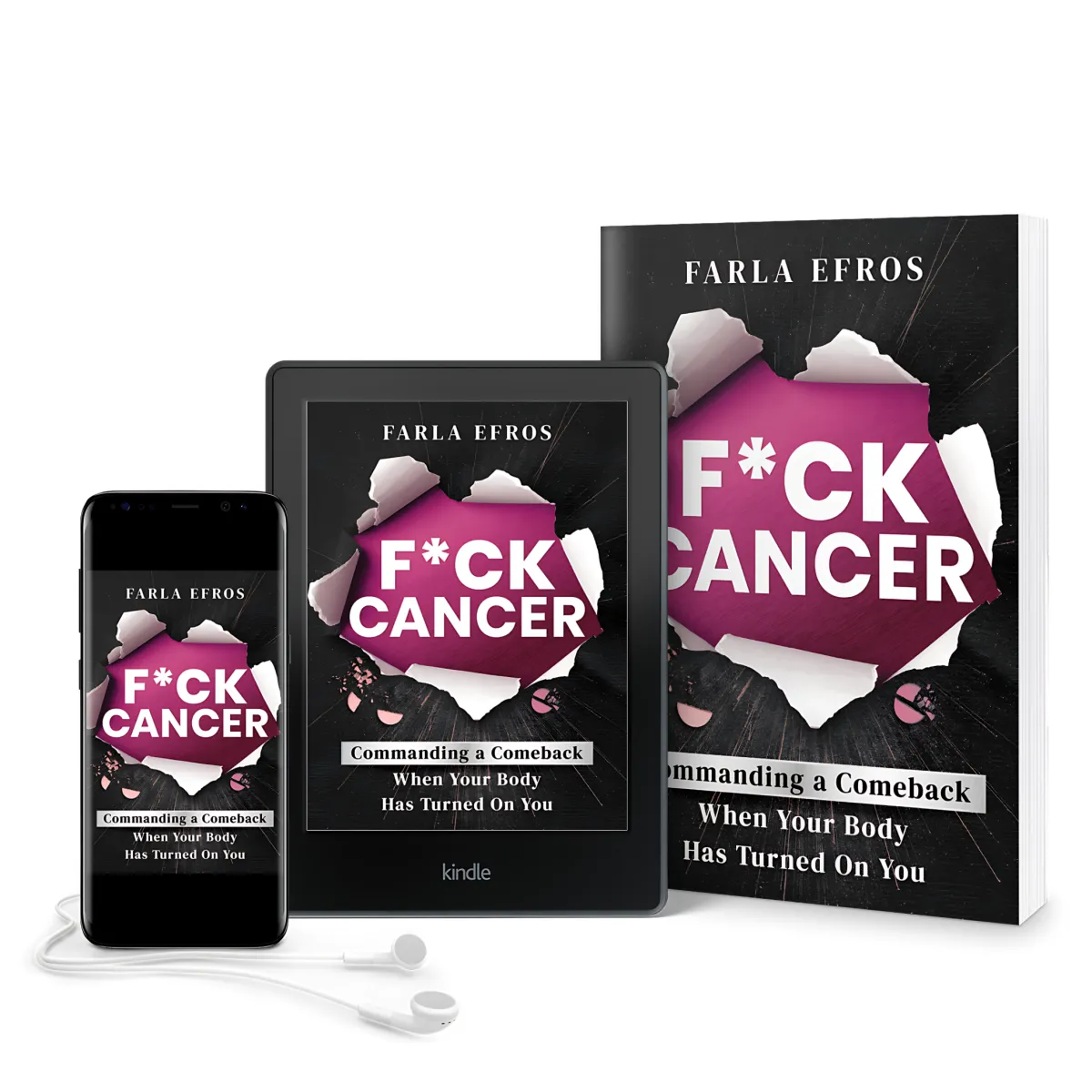
When Your Body Turns on You, Who's in Charge?
When cancer barges into your life, it feels like chaos has set up camp in your living room.
One minute you're running your business, taking care of your family, juggling life's ups and downs. Next, you're walking out of the doctor's office feeling the earth shift underfoot.
But here's what no one tells you: you still have control. You're not just a patient anymore; you're the CEO of your comeback.
When life threatens to collapse, choose your comeback.
Whether you are looking for a tactical advocate to help you manage a medical team or a mentor to guide you through the raw, unedited blueprint for resilience, let’s start the conversation.
Get the tools to
reclaim control.

©2026 Farla Efros. All Rights Reserved Privacy Terms